Most small businesses think email deliverability problems only happen to big companies sending millions of messages. The truth is the opposite. Smaller senders are often hit harder because inbox providers are far less forgiving when their sending habits look risky, inconsistent, or low quality. What makes deliverability even more challenging is that many of the risks are invisible. You can be hurting your sender reputation long before you see a drop in open rates or notice emails slipping into spam due to these email deliverability risks..
While businesses focus on design, content, and catchy subject lines, the technical side of email is often overlooked. That’s where the real damage happens. Old lists, poor authentication, cold subscribers, inconsistent sending, and a few questionable sending practices can quickly lower your inbox placement without you realizing it.
The good news is that these issues are preventable. Once you understand the hidden deliverability risks and how inbox providers evaluate your domain, you can protect your reputation, improve your inbox placement, and get more value out of every campaign you send.

Email Deliverability Risks #1: Using Old or Purchased Email Lists
Many small businesses assume that “more contacts equals more opportunity,” but when it comes to deliverability, the opposite is often true. Old lists, outdated customer data, and purchased email lists are some of the fastest ways to damage your sender reputation. Inbox providers like Gmail, Yahoo, and Outlook watch how your audience responds to each send. If you consistently reach people who never open, no longer exist, or never opted in, your domain gets flagged as a risky sender.
Why Old Lists Damage Your Reputation
Subscriber data goes stale quickly. People change jobs, abandon email addresses, or stop engaging with certain brands. When you send to an old list, you see:
- High bounce rates from inactive or closed inboxes
- Low engagement, which signals to inbox providers that your emails are unwanted
- Spam complaints, often from people who forgot they ever subscribed
This combination hurts your ability to land in the inbox, even for your engaged customers.
The Problem With Purchased or Scraped Lists
Purchased lists are one of the most dangerous deliverability risks. These lists often contain:
- Spam traps created by inbox providers
- Bot addresses are designed to identify bad senders
- People who never agreed to hear from you
Using a purchased list can cause immediate domain-level penalties. In severe cases, it can get your sending domain blocklisted.
How FireDrum Helps Prevent This
FireDrum is built to protect small businesses from the deliverability fallout caused by bad lists. The platform supports:
- List verification to identify invalid or risky contacts
- Automatic suppression of hard bounces and problem addresses
- Clear permission-based sending requirements that safeguard your domain
Constantly Sending to Unengaged Contacts
Repeatedly sending to unengaged subscribers is one of the most damaging behaviors for your sender reputation. Inbox providers pay close attention to how recipients interact with your messages. If large portions of your audience ignore your emails, your domain will gradually be pushed toward the spam folder.
Why “Bigger List” Thinking Backfires
An email list is only valuable when the people on it actually engage. Sending to subscribers who haven’t opened an email in months or years triggers a series of negative signals:
- Lower open rates, which tell inbox providers your content isn’t relevant
- Higher spam filtering, because unengaged users resemble spam trap behavior
- Reduced inbox placement for both inactive and active subscribers
Over time, even your best customers may stop seeing your campaigns because the providers have downgraded your overall sender reputation.
How Unengaged Contacts Hurt Deliverability
Inbox providers track the percentage of your list that opens your emails. When a large percentage of people consistently ignore you, the algorithm assumes your messages are unwanted or low-quality. This can lead to:
- Inbox throttling
- Promotions tab placement
- Spam folder placement
- Fewer emails delivered overall
These issues often develop slowly, making them hard for small businesses to notice until the damage is severe.
How FireDrum Helps You Reduce Risk
FireDrum gives you tools to keep unengaged subscribers from dragging down your entire program:
- Engagement-based segmentation that identifies active vs. inactive contacts
- Automatic suppression of long-term unengaged subscribers
- OpenBoost to give campaigns a second chance with potential openers without resending to your entire list
- Re-engagement workflows to warm cold subscribers before they hurt your metrics
Cleaning up your engagement profile is one of the simplest ways to protect your sender reputation and improve inbox placement across all your campaigns.
Email Deliverability Risks #2: Ignoring Domain Authentication (SPF, DKIM, DMARC)
Domain authentication is one of the most important parts of email deliverability, yet it is also one of the most overlooked. Many small businesses send campaigns without properly setting up SPF, DKIM, or DMARC records, and they have no idea how much this hurts their inbox placement. Inbox providers rely on authentication to verify that a sender is legitimate. When these records are missing or misconfigured, your emails are treated as suspicious before they ever reach the inbox.
Why Authentication Matters
Each authentication protocol has a specific job, and together, they prove that your email is truly coming from your domain:
- SPF verifies which platforms are allowed to send email on your behalf
- DKIM attaches a digital signature to your messages so inbox providers can confirm authenticity
- DMARC tells inbox providers what to do if SPF or DKIM fails
When these safeguards are not in place, inbox providers see your domain as high-risk. That increases spam filtering, reduces inbox placement, and can even block your sends entirely.
Common Small Business Mistakes
Small businesses often assume their email platform automatically handles authentication. In reality, most providers require these records to be added manually at the domain level. The most common mistakes include:
- No DMARC record at all
- SPF records with incorrect or outdated server entries
- Missing DKIM signatures
- Using personal email domains (Gmail, Yahoo) that cannot be authenticated properly
Without authentication, inbox providers may block your messages even if your list is clean and your content is solid.
How FireDrum Helps You Get It Right
FireDrum makes authentication easier and more accessible for small business owners. The platform:
- Provides step-by-step SPF, DKIM, and DMARC setup instructions
- Ensures your sending domain is aligned and trusted
- Reduces the risk of spoofing or phishing attempts using your domain
- Improves inbox placement by giving inbox providers the verification they require
Proper authentication is one of the fastest ways to improve deliverability. Once configured, it strengthens your sender reputation and increases the likelihood your emails will reach the inbox consistently.
Email Deliverability Risks #3: Using the Wrong “From” Address
Many small businesses overlook the importance of the “from” address, but it plays a major role in whether emails reach the inbox. Sending from personal domains like Gmail, Yahoo, AOL, or other consumer email providers is a red flag for inbox filters. These providers do not allow third-party platforms to send authenticated messages on their behalf, which means every campaign you send looks suspicious to inbox providers before they even analyze your content.
Why Personal Email Domains Hurt Deliverability
Using a personal email address for business email has several consequences:
- You cannot authenticate the domain, meaning SPF, DKIM, and DMARC cannot be aligned
- Inbox providers block or filter messages from unauthenticated sources
- Your emails appear unprofessional, which impacts trust
- Higher spam rates, because inbox providers know real businesses don’t send from consumer domains
Even if subscribers opted in, many of your emails will never reach them.
Why Custom Domain Sending Is Essential
A branded, domain-based email address (such as info@yourbusiness.com) gives you:
- Stronger inbox placement
- Better authentication
- Better recognition by subscribers
- Higher trust and fewer spam complaints
A professional sending domain also helps you maintain consistency across every campaign.
How FireDrum Ensures Proper Sending Identity
FireDrum provides:
- Domain verification tools
- Guided setup for authenticated sending
- Best practices for from-names and reply-to addresses
- Support for custom-domain senders only for maximum deliverability
A clean, authenticated sending domain is one of the easiest deliverability wins for small businesses.
Email Deliverability Risks #4: Sending Image-Heavy or “No Text” Emails
Small businesses often believe that highly designed emails with big images look more professional. While visuals matter, image-only or image-heavy emails are major deliverability risks. Spam filters rely heavily on text-to-image ratios to determine whether an email is promotional, risky, or likely to contain harmful content.
Why Image-Only Emails Trigger Spam Filters
If your email is mostly or entirely images, inbox providers cannot read the content. When filters can’t analyze your message, they assume the worst. Image-heavy emails cause:
- Higher spam scores
- Accessibility issues
- Slow loading on mobile
- Poor rendering in certain inboxes
- Lower engagement, because subscribers can’t tap what they can’t see
Filters often categorize image-heavy emails as bulk promotions, pushing them toward junk or promotions tabs.
Why Text-Light Emails Also Cause Problems
On the flip side, emails with too little structure or almost no visible text can look suspicious as well. Inbox filters rely on understanding context.
The Ideal Email Structure
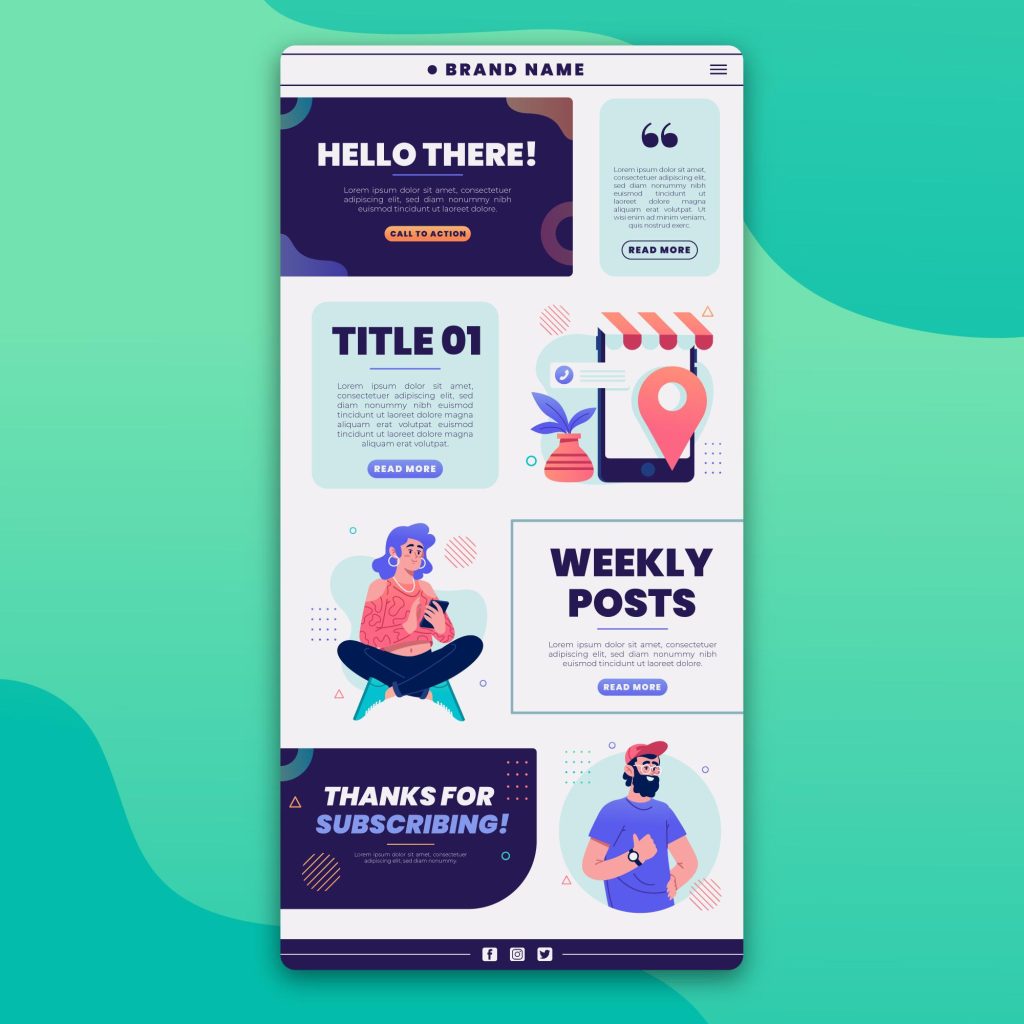
A well-balanced promotional email includes:
- A readable HTML layout
- A clear text-to-image ratio
- Alt text for all images
- Optimized, compressed visuals
- A clear CTA above the fold
- Short body copy to support the promotion
FireDrum’s built-in editing tools help ensure your designs follow deliverability best practices without needing a designer or advanced HTML experience.
Email Deliverability Risks #5: Not Monitoring Complaint Rates
Spam complaints are one of the strongest negative signals to inbox providers, yet many small businesses rarely check them. Even a small number of complaints can significantly damage your domain reputation, because inbox providers treat complaints as clear, direct user feedback that your messages are unwanted.
Why Spam Complaints Matter So Much
Unlike low engagement or soft bounces, a spam complaint is a definitive rejection. When a subscriber marks your email as spam, inbox providers treat that action seriously. A rising complaint rate leads to:
- Lower inbox placement
- Higher spam filtering
- Domain-level suppression
- Potential blocking for future sends
Even if your content is legitimate and permission-based, excessive complaints will hurt you.
Why Complaints Happen
Small businesses often trigger complaints due to avoidable issues:
- Sending too often
- Sending irrelevant promotions
- Using vague subject lines
- Not honoring engagement behavior
- Sending to contacts who haven’t opened in months
The good news is that complaints are preventable.
How To Reduce Complaint Rates
FireDrum makes it easy to keep complaints low by helping you:
- Segment out cold subscribers
- Maintain consistent, predictable sending patterns
- Improve content relevance with proper targeting
- Provide a clear, friction-free unsubscribe link
- Use automations that target only high-intent recipients
By monitoring complaints and adjusting your approach, you protect your sender reputation and ensure your campaigns continue landing in the inbox.
Email Deliverability Risks #6: Not Maintaining List Hygiene
List hygiene isn’t optional. It’s one of the core pillars of strong deliverability, and small businesses often underestimate how quickly an email list can become polluted with invalid, inactive, or risky contacts. Even a well-built list degrades over time. People change email addresses, abandon inboxes, mark messages as spam, or simply stop engaging. If you continue sending to these contacts, inbox providers interpret your behavior as careless or spam-like.
The Hidden Risks of an Unclean List
A poorly maintained list leads to several deliverability problems, including:
- Hard bounces that signal your list is outdated
- Soft bounces that can escalate into permanent blocks
- Spam traps, which are email addresses designed to catch senders who don’t maintain list hygiene
- Low engagement, which decreases your inbox placement
Any of these issues can cause your entire domain to suffer, even if your most engaged subscribers still want your emails.
Best Practices for Healthy Lists
Strong list hygiene comes from consistent, proactive cleanup, including:
- Removing subscribers who haven’t engaged in a set number of months
- Verifying new leads to prevent fake or misspelled emails
- Suppressing contacts after repeated bounces
- Monitoring engagement patterns and adjusting segments accordingly
- Using double opt-in when list quality is more important than list size
Clean lists produce higher open rates, better click-through rates, and stronger deliverability indicators.
How FireDrum Helps Maintain List Quality
FireDrum takes the complexity out of list hygiene with:
- Automatic suppression of problem contacts
- Built-in verification tools
- Bounce handling that prevents repeated sends to invalid addresses
- Engagement-based segments that keep your sends high-quality
With proper list hygiene, your emails have a significantly better chance of reaching the inbox and driving revenue.
Email Deliverability Risks #7: Poor Sending Patterns
One of the most overlooked deliverability risks is how small businesses send, not just what they send. Inbox providers pay close attention to sending behavior. Irregular patterns, sudden changes in volume, or unpredictable timing can all cause inbox providers to flag your emails as suspicious.
The Risks of Bad Sending Habits
Poor sending patterns typically include:
- Sudden spikes in volume (sending to the entire list after months of inactivity)
- Erratic timing, such as sending three campaigns in one week and none for a month
- Large jumps in frequency that make inbox providers question your consistency
- Batch-and-blast sends to the entire list without segmentation
These behaviors resemble spammer activity, even when the sender is a legitimate business.
What Inbox Providers Want To See
Healthy sending patterns look consistent and trustworthy. Inbox providers reward senders who:
- Maintain regular, predictable send times
- Gradually increase volume instead of jumping from small sends to massive blasts
- Use segmentation to keep engagement high
- Spread sends throughout the month instead of clustering all campaigns together
Stable patterns help inbox providers understand that your mail is legitimate and expected by your audience.
How FireDrum Helps Stabilize Your Sending Strategy
FireDrum improves sending patterns by providing:
- Engagement reporting to fine-tune who receives your campaigns
- Automated journeys that deliver emails at the right time based on customer behavior
- Tools to test and schedule sends for ideal timing
- OpenBoost to re-engage without overwhelming your list
The more consistent and predictable your sending pattern becomes, the stronger your domain reputation grows over time.
Protect Your Sender Reputation Before It’s Too Late
Strong deliverability is built on consistent sending patterns, authenticated domains, clean lists, relevant content, and a commitment to removing friction points that damage your reputation. Most small businesses never realize how many hidden risks they’re taking until open rates drop, clicks slow, or customers say they never received the email. By that point, recovery becomes much harder.
The good news is that every risk covered in this guide is entirely avoidable. With proper list hygiene, good engagement habits, smart segmentation, approved sending domains, and predictable sending behavior, you can protect your sender reputation and improve inbox placement across every campaign.
FireDrum gives small businesses the tools, guidance, and automation they need to avoid these hidden deliverability pitfalls. If you want help improving your inbox placement, cleaning your list, authenticating your domain, or building a smarter sending strategy, our team is ready.
Reach out to FireDrum Email Marketing and put your campaigns back in the inbox.